
As AI, automation and industry change reshape the labour market, two people with the same job title may have very different skills, career pathways and capacity to adapt.
The same is true for job seekers. A shared occupational background does not mean a shared career outlook. People coming from the same profession may have very different skills, experience and transferable capabilities—and therefore very different pathways into future employment.
So how can we move beyond job titles to understand the skills, pathways and opportunities that shape people’s employment prospects? Our recently published white paper explores this question, drawing on a detailed job postings dataset from Jobs and Skills Australia. The dataset contained 47,456 job role records and 2,033 distinct skills across 37 sectors.
What we found challenges some deeply held assumptions about how careers work and offers organisations a practical map for helping their workforce grow from within.
Key insights for enterprises
Job titles hide critical differences in capability and risk
Employees with the same ANZSCO code can have very different skill profiles, progression potential and exposure to automation. Without a direct, granular view of skills, organisations routinely misjudge mobility, succession and redeployment options.
Three skill types explain most workforce mobility and resilience
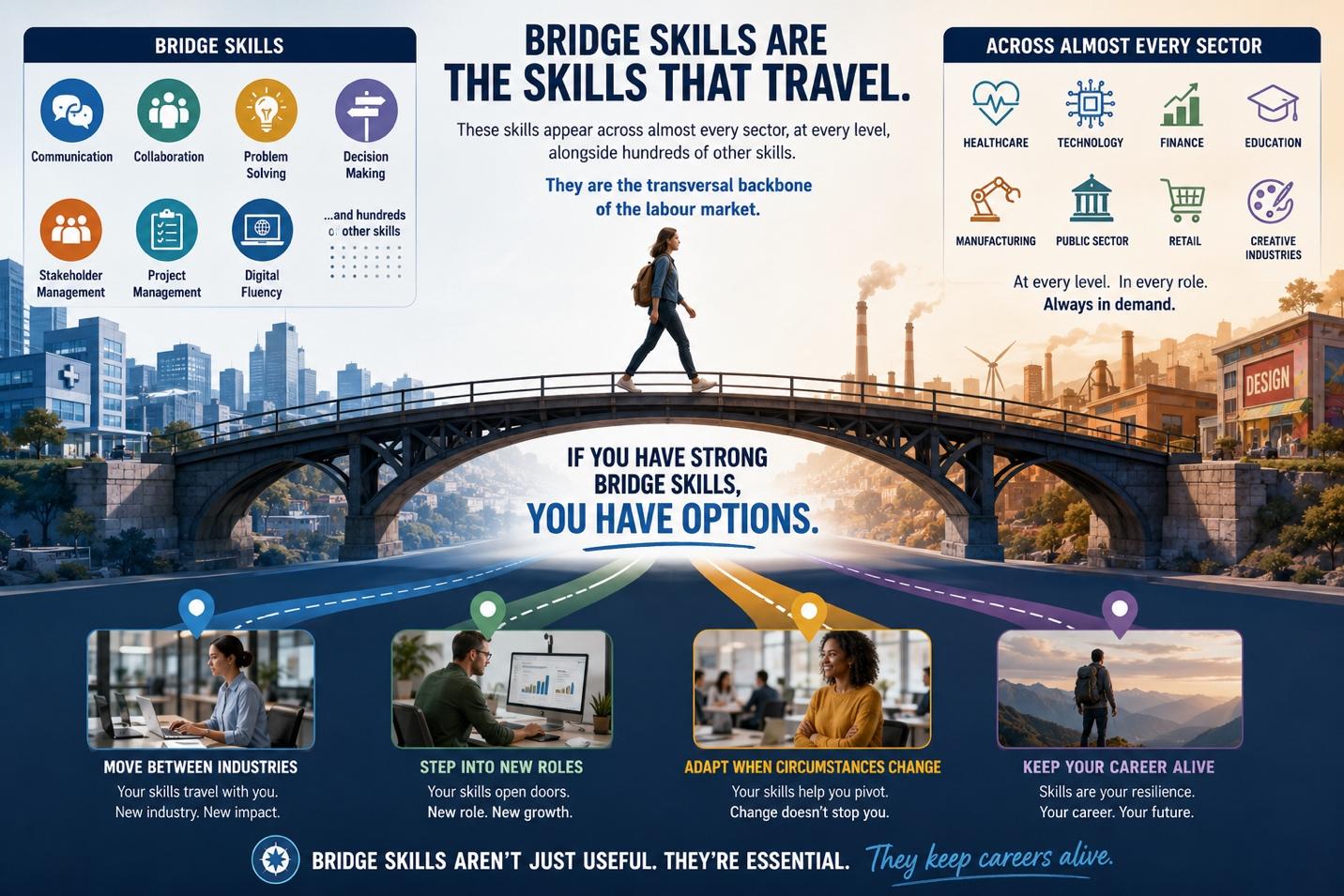
Bridge skills, dead end (niche) skills and skill synergies together provide a practical framework for understanding which capabilities travel across roles, which are vulnerable to demand shifts, and which combinations underpin supervisory, managerial and hybrid positions.
Progression and leadership are driven by skill synergies, not tenure
Step-up roles are characterised by powerful skill combinations—such as Communication plus Stakeholder Management, or Problem Solving plus Project Management—rather than simply more years of technical experience. Designing for these clusters changes how organisations think about career paths, succession and development.
A skills-based architecture is now essential for managing AI and inequality
As automation changes the content of work, the divide between workers with strong, portable skill portfolios and those with narrow specialisations will grow within roles, not just between them. A dynamic skills architecture enables fairer progression, smarter redeployment and more precise organisation design.
Want to know more?
The full white paper is available upon request. If you’d like to explore how this skills taxonomy and architecture could work in your organisation—whether you are an employment service agency supporting jobseekers with data-driven career tools or leading workforce planning, learning and development—we would be pleased to talk.
You can also book a demo to see our interactive services in action, including:
- The roles and skills in your organisation most affected by AI and automation
- How skills-based recommendations support redeployment and internal mobility
- How to visualise career paths across your workforce